
Zambia's women's national team, the Copper Queens, have turned a structural disadvantage into a tactical identity. At the 2023 World Cup, they became the first African side to score at the tournament。yet the gap between them and traditional powers like Spain or Japan remains a study in contrasts. Watch a Zambia match closely: the build-up is vertical, often bypassing midfield entirely, relying on Barbra Banda's hold-up play and Racheal Kundananji's acceleration. It's exhilarating, but it's also a system born of necessity. Most Zambian players develop on uneven, dusty pitches where passing sequences are unreliable. Directness isn't a choice—it's a survival mechanism.
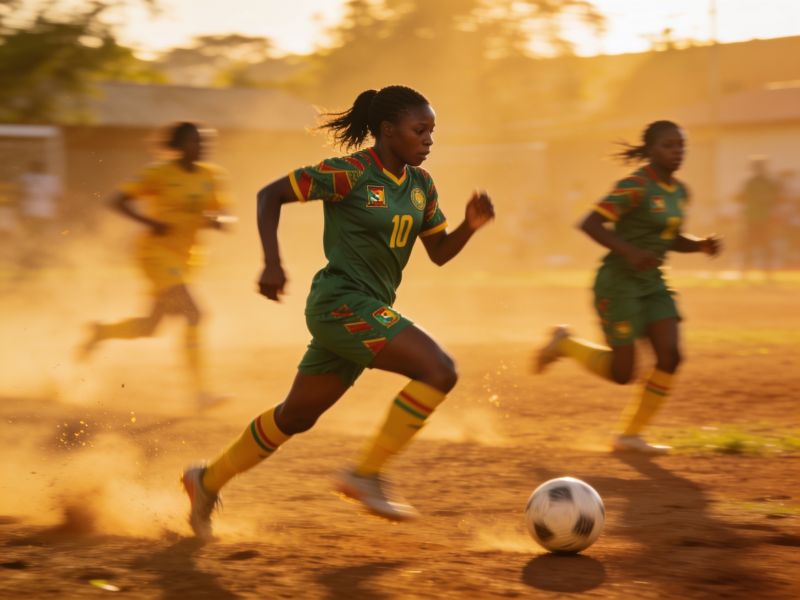
Compare that to women's football in Europe, where the tactical baseline has shifted dramatically. England's Euro 2022 victory showcased a possession-heavy 4-3-3 that hinges on full-backs inverting and midfielders rotating. Zambia doesn't have that luxury. Their domestic league lacks the resources for consistent video analysis or structured youth academies. When I spoke to a Zambian assistant coach last year, he admitted the team often practices on borrowed fields and relies on European-based players to relay tactical instructions. That informality breeds improvisation but costs them defensively—Zambia conceded 11 goals in three World Cup group games, many from set-piece disorganization. Women's Football vs Zambia, in this light。isn't just a matchup;it's a confrontation between institutional depth and individual resilience.The midfield is where this gap becomes visceral. Zambia's engines—players like Mary Wilombe—are tireless runners, but they're asked to cover ground that a structured midfield would divide among three. Against Spain, Zambia's midfield was pulled apart by rapid switches;the Spanish players had time to pick passes because Zambian pressing was reactive, not coordinated. European teams train pressing triggers for hours. Zambia's triggers are instinctive。often mistimed. Yet this same looseness allows them to counterattack with chaotic brilliance. Banda's goal against Costa Rica came from a turnover in her own half—three passes, five seconds, finish. That's the paradox: the tactical weakness and the scoring threat are twins.Player development tells the story too. Most Zambian internationals leave home by 18, joining clubs in Spain, China, or the US. That exposure is invaluable, but it fragments the national team's cohesion. They assemble for brief camps。
then disperse. Contrast that with Sweden or the Netherlands, where core club groups—like Häcken or Ajax—feed the national side with pre-existing chemistry. Zambia's coaching staff has adapted by simplifying roles: wingers stay wide, the defensive line drops deep, and Banda is given a free role. It's pragmatic, but it caps their ceiling. Women's Football vs Zambia matches often expose this: opponents overload one flank, Zambia adjusts late, and the shape never fully recovers.Change is happening, slowly. Zambia's football federation has announced a national league expansion and partnerships with FIFA for coaching education. But infrastructure moves at a different pace than talent. Banda and Kundananji are world-class outliers;
the next tier of Zambian players needs consistent league minutes on decent pitches。not just inspiration from abroad. Until that materializes, Zambia will remain a dangerous outsider—capable of shocking a top team on a good day, but vulnerable to tactical discipline over ninety minutes. That's not a criticism. It's a reflection of how uneven the global development map still is in women's football, and why a Zambia match is always worth watching.